
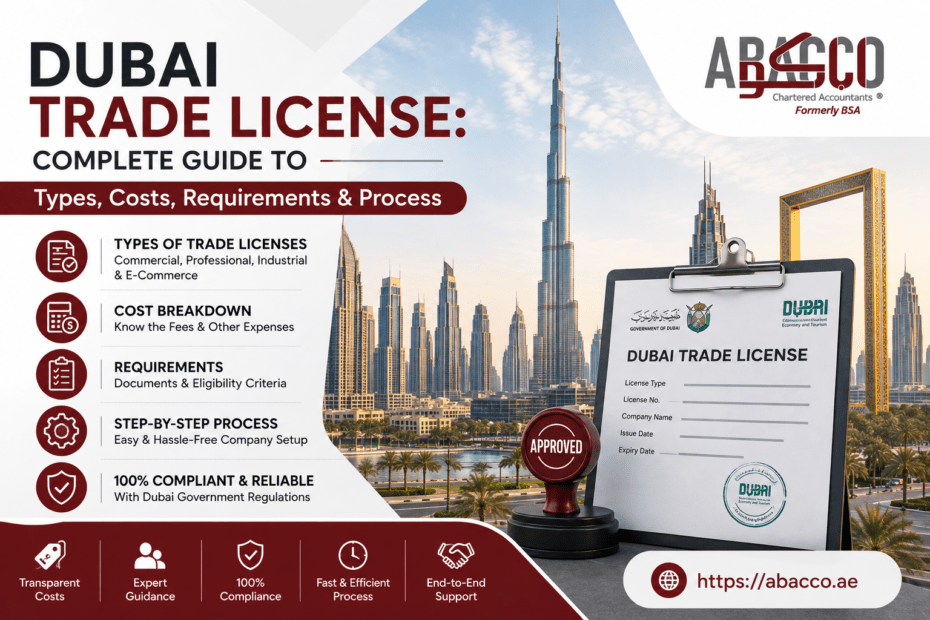
So you’re thinking about starting a business in Dubai. Good move — but before you can sign a single deal or open a bank account, there’s one document standing between you and everything else: the trade license. It sounds bureaucratic, and honestly, it kind of is. But once you understand how it actually works, the process stops feeling like a maze and starts feeling manageable.
This guide walks through what a Dubai trade license actually is, the different types you can apply for, what it really costs in 2026 (not just the sticker price), the paperwork you’ll need, and the steps to get one issued.
What Exactly Is a Dubai Trade License?
Put simply, a Dubai trade license is the government’s stamp of approval that says: yes, this business is allowed to operate here, doing exactly what it says on the license. It’s issued either by Dubai’s Department of Economy and Tourism (DET) for mainland companies, or by the relevant authority if you’re setting up in a free zone.
No license, no legal business. That’s true whether you’re a local entrepreneur or a foreign investor setting up from scratch. Your Dubai trade license also locks in your permitted activities — so if you’re licensed for consulting, you can’t suddenly start selling retail goods without amending it first.
Types of Trade Licenses in Dubai
Not every business fits into the same box, which is why Dubai offers a handful of license categories depending on what you actually do.
Commercial License
This is the one most people end up needing. It covers buying and selling — trading, import/export, general retail. If your business revolves around moving physical goods, this is your category.
Professional License
More suited to service-based work: consultants, IT freelancers, marketing agencies, designers. One nice perk here is that many professional licenses allow full individual ownership without needing a local partner.
Industrial License
For anyone in manufacturing or production — think food processing, textiles, or assembly work. These tend to cost more upfront simply because of the infrastructure and approvals involved.
E-commerce or E-trader License
If you’re running things purely online with no physical shop, this is usually the cheapest and fastest way in. A lot of small business owners and solo founders start here.
There’s also the question of where you set up — mainland, free zone, or offshore. Mainland gives you the freedom to trade anywhere in the UAE. Free zones let foreign owners keep 100% control of their company, though trading outside the zone (or within the wider UAE market) usually means working through a local distributor. Offshore, meanwhile, isn’t really meant for operating inside the UAE at all — it’s more of a structuring tool for international business.
How Much Does a Trade License Cost in Dubai in 2026?
This is probably why you’re here, so let’s not bury it.
If you’re going the mainland route through DET, expect a basic professional license to start somewhere around AED 10,000. A general trading license usually lands between AED 25,000 and 30,000. Industrial licenses run higher still — often AED 25,000 or more, again because of the extra regulatory steps.
Free zones tend to be friendlier on the wallet, at least at the entry level. Depending on which zone you pick, licenses can start anywhere from about AED 5,800 up to AED 12,500 for standard activities. Go for a premium zone with a bigger office setup, though, and that number can climb past AED 50,000 pretty quickly.
Here’s the part a lot of guides skip over: the license fee is rarely your final bill. On top of it, you’re usually looking at:
- Initial approval fee — roughly AED 120
- Trade name reservation
- Office rent or a flexi-desk package
- Ejari registration if you’re on the mainland
- Visa costs, around AED 4,000–5,000 per person
- Establishment and immigration cards (needed for visa sponsorship)
- Basic health insurance per employee
- Fees for adding extra business activities later
Add it all up, and most business owners end up paying somewhere between 1.5 and 2 times the headline license fee in that first year. It’s worth budgeting for that reality upfront rather than being caught off guard three months in.
What Documents Do You Need for a Dubai Trade License?
Requirements shift a bit depending on your activity and jurisdiction, but at minimum, you’ll typically need:
- Passport copies for all shareholders and partners
- Passport-sized photos
- Your chosen trade name (has to follow UAE naming rules — no religious references, no restricted words)
- Initial approval certificate
- Memorandum of Association, if your legal structure calls for one
- Tenancy contract or Ejari certificate
- A No Objection Certificate, if you’re currently sponsored on a visa by another employer
Certain industries — healthcare, education, transport, anything food-related — come with an extra layer of approvals from the relevant regulatory body before your license gets finalized. Worth checking early so it doesn’t hold things up later.
The Process: How to Apply for a Trade License in Dubai
Here’s roughly how it plays out, step by step:
- Pick your jurisdiction. Mainland, free zone, or offshore — this decision shapes everything else.
- Nail down your business activity. This determines which license category you’ll be applying for.
- Reserve your trade name. Make sure it follows the naming guidelines before you fall in love with it.
- Get initial approval. This is basically the government saying they have no objection to you moving forward.
- Sort out your business location. Sign a tenancy agreement and, for mainland setups, register it through Ejari.
- Submit your documents. Everything goes to DET or your chosen free zone authority.
- Pay the fees. Once approved, settle the costs and your license gets issued.
If your paperwork is in order, straightforward applications can move surprisingly fast — sometimes just a few working days. Anything needing outside approvals will naturally take a bit longer.
Which License Do You Actually Need?
If you’re stuck deciding, start with what your business actually does day to day. Selling physical products? Commercial license. Offering a service? Professional license. Making or producing something? Industrial license. A lot of first-time founders and small businesses lean toward a free zone e-commerce or professional trade license simply because it’s cheaper to start and the visa process tends to be simpler.
Quick Questions People Ask
How much does a trade license cost in Dubai?
Mainland licenses generally start around AED 10,000, while free zone options can begin as low as AED 5,800 — though your final number depends on activity and location.
How long does it take to get a trade license in Dubai?
With complete documentation, it can take just a few working days. Activities that need extra government approvals will take longer.
Can foreigners get a trade license in Dubai?
Yes, and it’s common. Most free zones allow 100% foreign ownership, and mainland ownership rules have opened up considerably for many business activities too.
What documents are required for a Dubai trade license?
At a minimum: passport copies, photos, a reserved trade name, initial approval, and either a tenancy contract or Ejari registration.
Final Thoughts
A Dubai trade license isn’t just a formality to check off a list — it’s genuinely the foundation everything else gets built on. Get the license type and jurisdiction right from the start, and the rest of your setup tends to go a lot smoother. Rush it, or guess your way through it, and you’ll likely end up paying for that mistake later — sometimes literally. Take the time to plan it properly, and you’ll save yourself both money and headaches down the road.